
Specialist underground fuel tank decommissioning, ensuring safe removal of redundant tanks, pipework and infrastructure. Controlled, environmentally responsible services UK-wide.
Decommissioning redundant fuel storage systems is essential for maintaining safe, compliant, and environmentally responsible sites. Over time, unused fuel tanks can deteriorate, develop corrosion, retain residual fuel, and present environmental or operational risks if they are not properly isolated and removed. Professional decommissioning ensures these risks are controlled and managed correctly.
Octane Holding Group provides professional underground fuel tank decommissioning services for commercial, industrial, agricultural, transport, aviation, defence, and public sector organisations throughout the UK. Our experienced engineers safely isolate, empty, clean, remove, and dispose of above ground and below ground fuel storage tanks. Subsequently helping customers meet regulatory requirements, protect the environment, reduce site risks, and prepare infrastructure for future use.
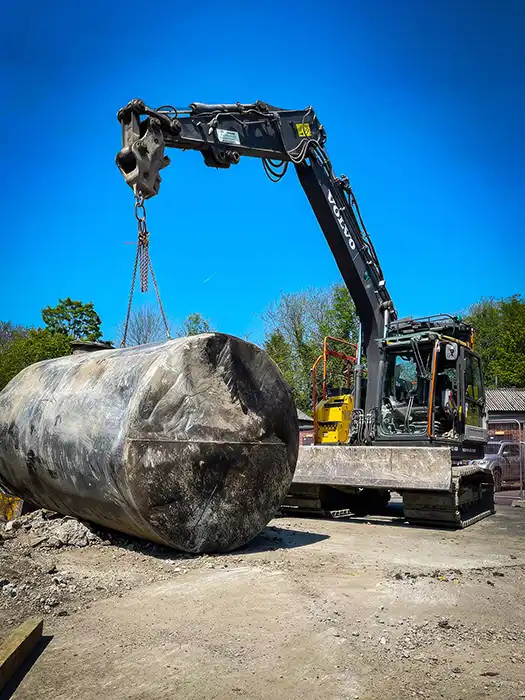
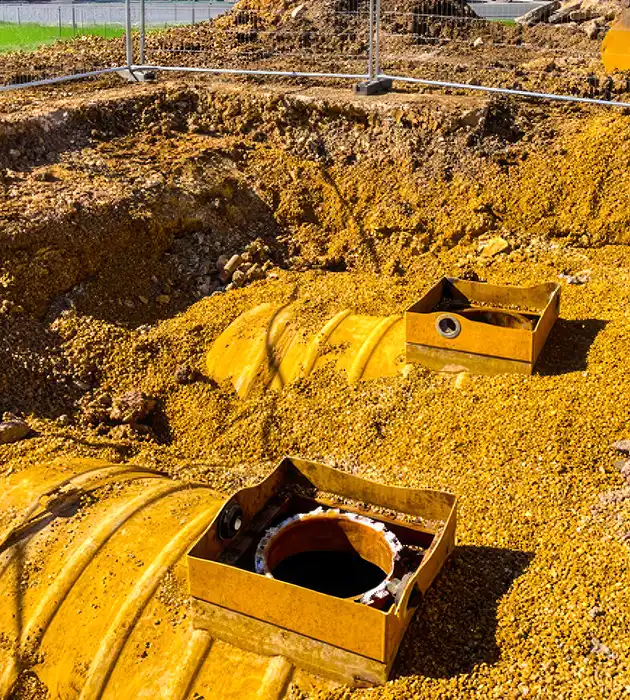
Redundant fuel tanks present significant safety and environmental risks after service. Residual fuel, vapours, corrosion, structural deterioration, and contaminated materials create hazards. These hazards threaten personnel, property, and surrounding environments. Professional decommissioning removes these risks and manages tanks responsibly.
Our specialist team combines proven techniques with industry-leading equipment. We safely isolate, clean, remove, and dispose of redundant fuel storage systems. Where appropriate, we also recover fuel, manage waste, and complete associated site works. Thus, we help customers reduce environmental risks and meet regulatory obligations. Finally, we return areas to safe, usable condition.
Professional underground fuel tank decommissioning plays a vital role in reducing environmental risks. In addition, it maintains site safety and ensures responsible removal. Furthermore, redundant storage systems are removed safely and efficiently.
However, unused tanks can deteriorate over time. Consequently, contamination can become a significant issue. Therefore, organisations should address tanks early. As a result, future liabilities are minimised. Moreover, remediation costs are reduced. Finally, compliance with legislation and best practice is maintained.
Octane Holding Group combines engineering expertise with specialist equipment. Additionally, we use proven methodologies for safe delivery. Thus, our decommissioning services are effective and environmentally responsible. Whether for a single tank or complex installation, we provide reliable solutions. Ultimately, we safely manage the complete decommissioning process.
1. Complete a Full Risk Assessment
Assess tank condition, environmental risks, project requirements, and costs. Also assess potential impact on businesses, residents, and the environment.
2. Test Soil and Groundwater
Sample soil and groundwater before, during, and after tank removal. Then identify contamination and determine appropriate remediation requirements.
3. Remove Residual Fuel and Waste
Remove residual fuel and liquids from tanks and connected pipework. We call this process bottoming. Then handle waste responsibly and transport it to permitted facilities.
4. Remove Explosive Vapours
Remove explosive vapours from tanks and pipework before removal. Make tanks safe using inert gas or water methods. Then collect and dispose of contaminated water appropriately.
5. Remove Tanks, Pipework and Equipment
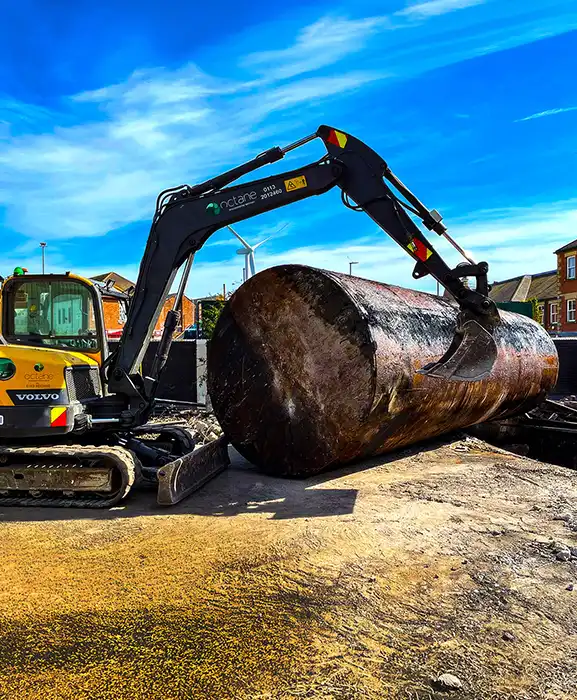
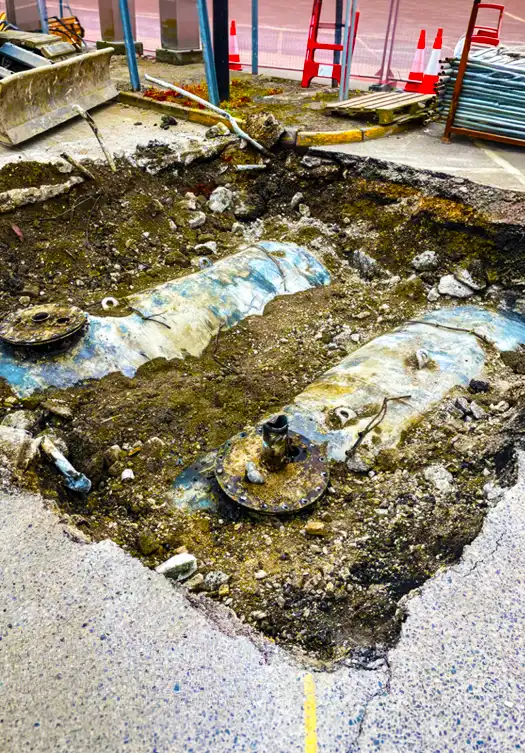
Carefully remove underground tanks, pipework, and associated equipment. Handle contaminated materials lawfully and dispose of them through appropriate channels.
6. Manage Surface and Contaminated Water
Prevent rainwater and surface water from entering the excavation. It could become contaminated otherwise. Collect, treat, and dispose of contaminated water safely.
Reducing the risks that are associated with redundant fuel tanks, residual fuel, explosive vapours and ageing, deteriorating fuel infrastructure.
Protecting the environment by minimising the risk of fuel releases, ground contamination and pollution through controlled decommissioning.
Support compliance with environmental, waste management and industry requirements through professional decommissioning.
Remove redundant infrastructure before deterioration creates greater environmental, operational or unexpected remediation costs and disruption.
